
Highlights
- Sulforaphane, found in cruciferous vegetables like broccoli, has potent anti-cancer properties
- Active sulforaphane is unstable so it must be taken as a precursor called glucoraphanin together with a natural activator enzyme found in all of these vegetables
- Broccoli sprouts contain the highest amounts of glucoraphanin but other vegetables like watercress, kale, cabbage, collard greens, brussels sprouts, bok choy, mustard greens, and cauliflower are also sources
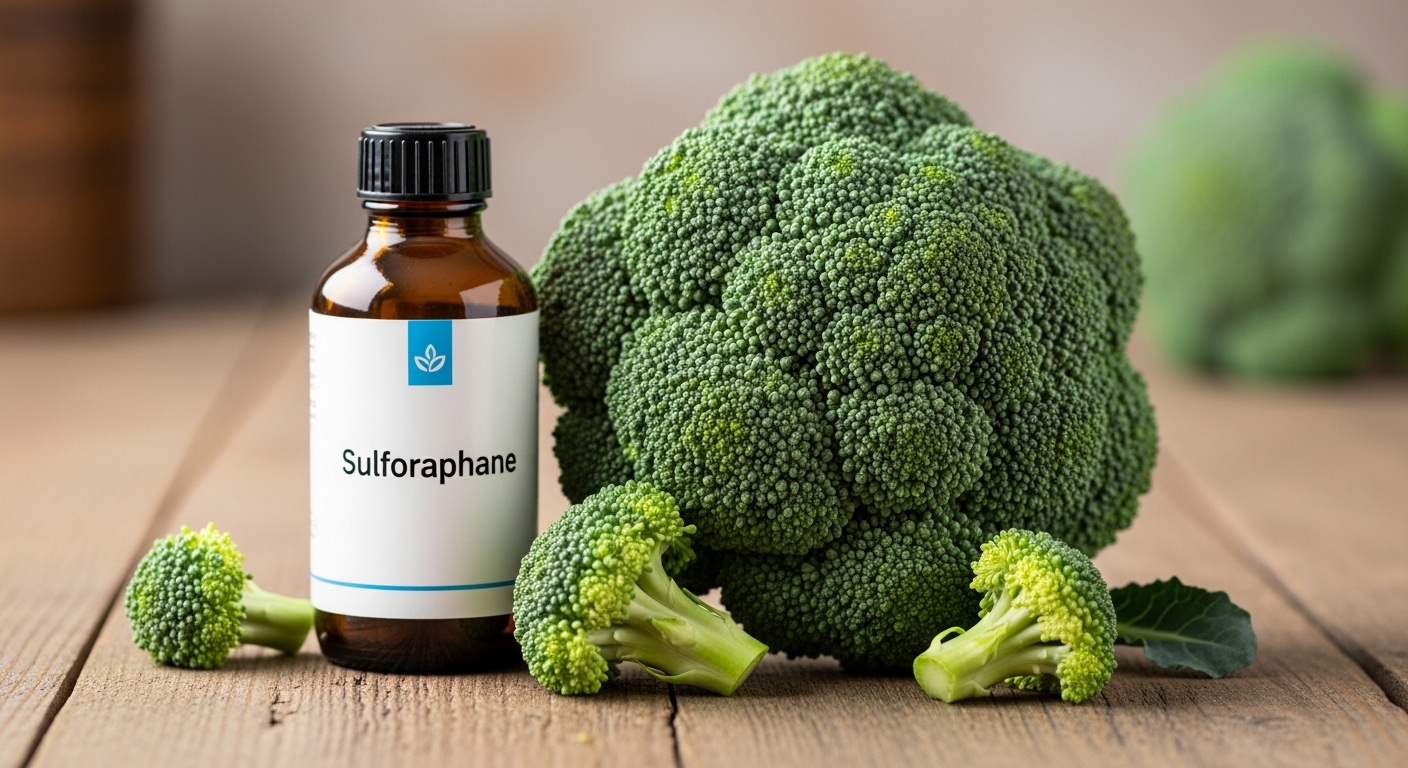
Sulforaphane is derived from precursor molecules found in cruciferous vegetables like broccoli, brussels sprouts, cabbage and cauliflower. Sulforaphane itself is chemically unstable and has a relatively short shelf life. When we eat these vegetables, Sulforaphane is generated in our gut from a stable precursor called glucoraphanin by the action of the enzyme myrosinase, both of which are found in these cruciferous vegetables. As we chew these vegetables, the plant cell walls break down, releasing the enzyme which converts glucoraphanin into sulforaphane. Since the reaction takes place in our GI tract, the freshly made sulforaphane is readily absorbed by the body.
Biology
A major effect of sulforaphane at a cellular level is the activation of a transcription factor called NRF-2 whose activity declines with age. NRF-2 in turn activates cellular antioxidant and detoxification enzymes and the production of our body’s natural antioxidant, glutathione. It also reduces overall inflammation. Multiple lines of evidence point to a neuroprotective effect of sulforaphane by blocking amyloid beta and tau formation.
Clinical Evidence
A recent clinical study demonstrated the effect of Sulforaphane in reducing overall inflammation. Forty healthy overweight adults incorporated 30g of fresh broccoli sprouts into their daily diet for 70 days. The sprouts contained approximately 51 mg of glucoraphanin. During the 70-days the levels of two inflammatory markers IL-6 and CRP decreased steadily in the subjects.
Supplementation
The best source of Sulforaphane is broccoli sprouts. But raw or slightly cooked cruciferous vegetables are also good sources. Here is a longer list of these: broccoli, watercress, kale, cabbage, collard greens, brussels sprouts, bok choy, mustard greens, and cauliflower. But broccoli sprouts contain by far the most sulforaphane. One can also buy the sulforaphane precursor glucoraphanin plus the activating enzymes in capsule form.
Safety
There are a few important things to keep in mind with sulforaphane, especially if you are taking certain medications. Sulforaphane inhibits the drug metabolizing liver enzyme CYP1A2. So if you are taking any such medications that are metabolized by this enzyme, you need to be careful and consider avoiding sulforaphane or not taking it at the same time as the medication. It is important to talk to your doctor about Sulforaphane supplements or any supplement for that matter. WebMD has a partial list of the medications that are contraindicated. In mouse toxicology studies, acute high dose sulforaphane treatment led to increased seizures susceptibility to seizures and other toxicity symptoms so caution is warranted.
Houghton, C. A. (2019, October 14). Sulforaphane: Its “Coming of Age” as a Clinically Relevant Nutraceutical in the Prevention and Treatment of Chronic Disease. Oxidative Medicine and Cellular Longevity. https://onlinelibrary.wiley.com/doi/10.1155/2019/2716870
Kim, J. (2021, March 13). Pre-Clinical Neuroprotective Evidences and Plausible Mechanisms of Sulforaphane in Alzheimer’s Disease. International Journal of Molecular Sciences. https://www.mdpi.com/1422-0067/22/6/2929/htm
Sulforaphane: Overview, Uses, Side Effects, Precautions, Interactions, Dosing and Reviews. WebMD. https://www.webmd.com/vitamins/ai/ingredientmono-1070/sulforaphane
Socała, K., Nieoczym, D., Kowalczuk-Vasilev, E., Wyska, E., & Wlaź, P. (2017, June 1). Increased seizure susceptibility and other toxicity symptoms following acute sulforaphane treatment in mice. Toxicology and Applied Pharmacology. https://doi.org/10.1016/j.taap.2017.04.010