
Highlights
- Zinc is an important mineral required for many enzyme function and particularly important for proper functioning of the immune system
- Our bodies do not have a way to store zinc so we must take in daily zinc from food or supplements
- Vegetarians are at risk of taking in lower than optimal zinc from food
- US National Academies recommends supplementation of 11 mg for men and 8 mg for women over the age of 19, with a maximum supplementation of 40 mg per day
We included zinc in our supplement stack for a couple of reasons. First, our bodies do not have a mechanism to store zinc, so we need to take in zinc daily from food sources or supplements. Specifically, for people on a vegetarian diet that’s high in legumes, zinc absorption is low because of ‘phytates’ found in whole-grain breads, cereals and legumes bind to zinc and decrease its absorption. In addition, bioavailable zinc levels tend to be low in plant-based foods. So, for vegetarians, zinc supplementation may offer additional healthspan benefits.
The biology
Zinc plays an important role in our immune function, protein synthesis, wound healing DNA synthesis cell division etc. As mentioned, the body has no way to store zinc, so we have to take in zinc daily in order to maintain normal levels.
Clinical Evidence
While zinc defficiency per se is not common in most of the developed world, zinc supplementation, particularly on a vegetarian diet could a beneficial. There is also evidence that zinc lozenges can decrease the duration of the common cold when taken within 24 hours of the onset of symptoms. While there were a few studies that did not find any benefit to zinc supplementation, other studies showed that the duration (not the severity) can be shortened by zinc supplementation. This was supported by a meta-analysis of clinical trials from Cochrane Review that stated: Zinc administered within 24 hours of onset of symptoms reduces the duration and severity of the common cold in healthy people.
There’s also evidence indicating that zinc can slow down the progression of age-related macular degeneration (AMD). Importantly, zinc supplementation was only shown to slow down the progression of AMD, but did not help with primary prevention of AMD. This was shown by the AREDS (80 mg per day for 6.2 years) and the AREDS2 (25 mg per day for 5 years) clinical studies.
Supplementation
Guidelines for taking zinc:
Recommended daily allowance (19 years and older):
- Men: 11mg
- Women: 8mg
Tolerable upper intake levels (UL);
- Men: 40 mg
- Women: 40 mg
Some food sources of zinc:
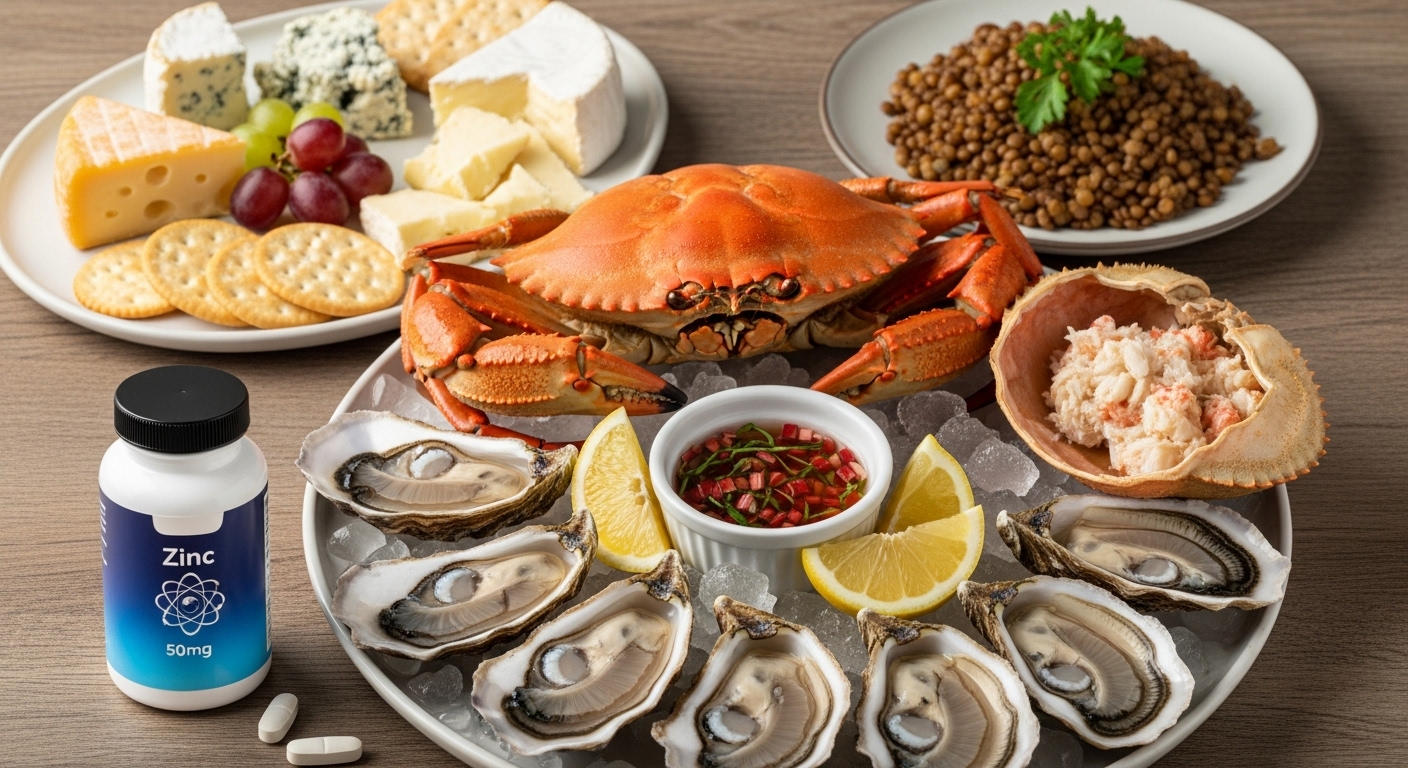
Oysters contain a large amount of zinc. Other sources include beef, crab, lobster, pork chops, chicken, beans, Pumpkin seeds, yogurt, cashews, chickpeas etc.
Safety
Per recommendations of the National Academies food and nutrition board, it is best not to exceed 40 mg/day, although the AREDS clinical trial for age-related macular degeneration went upto 80 mg/day. With very high doses such as the one used by AREDS, there was an increase in hospitalizations due to genitourinary complications. There can be potential drug interactions if someone is taking quinolone or tetracycline antibiotics. Other interactions include penicillamine (for arthritis) or thiazide diuretics. A more complete list can be found at WebMD and NIH-ODS.