
Highlights
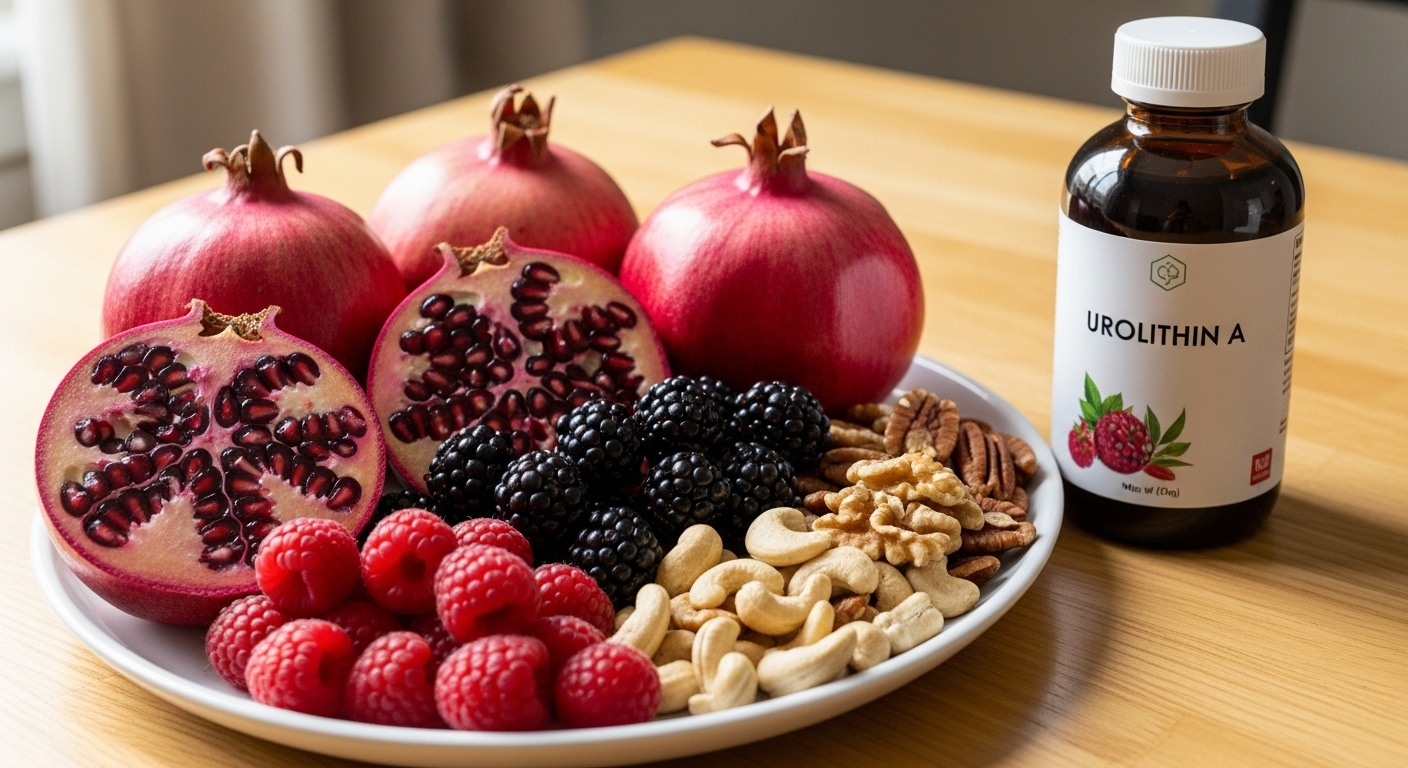
- Urolithin A (UA) is a gut microbiome-derived metabolite produced from ellagitannins found in pomegranates, berries, and nuts.
- It promotes mitophagy, the selective recycling of damaged mitochondria, thereby improving cellular and metabolic health.
- In preclinical studies, it was found to promote cardioprotection and muscle function in rodents. Also beneficial against anxiety, schizophrenia-like behaviors.
- Human trials show improved mitochondrial biomarkers and muscle endurance in older adults at daily doses of 250–1000 mg for 2–4 months.
Biology
Urolithin A is not directly found in foods but is produced by gut bacteria that metabolize ellagic acid from foods like pomegranate, berries and tree nuts. It key biologica function is the activation of Mitophagy: the removal of defective mitochondria to maintain mitochondrial health and efficient cellular energy production. Urolithin A in preclincial studies, also showed a reduction in inflammatory markers and oxidative stress in the liver and heart. Recent preclinical evidence suggests that mitochondrial dysfunction in neurons contributes to neuropsychiatric conditions. In rats, UA restored mitochondrial integrity and synaptic connectivity, alleviating high-anxiety behavior.
Clinical Evidence
A 2022 study in JAMA evaluated 66 subjects with an average age of 71.7 years. They were given 1000 milligrams a day of Urolithin A orally for four months. The study found that subjects on the treatment group improved their leg and hand muscle endurance. Notably, their six-minute walk distance increased by 6.8 meters compared to 42.5 meters in the placebo group. While promising, this study was not sufficiently powered to be statistically significant.
A previous study from 2019 published in Nature Metabolism also showed promising signs towards improvement of mitochondrial and cellular health. In the study, 500 to 1000 milligrams per day of Urolithin A for four weeks induced gene expression patterns associated with improved mitochondrial and cellular function. This study also found a modification of plasma acylcarnitine levels, which are the main carriers of lipids to the mitochondria for lipid breakdown and energy (ATP) generation.
UA may benefit heart health as well. The heart is under extreme energy demand throughout our lives. A recent 2025 study evaluated whether mitochondrial dysfunction is associated with heart aging. In a large-scale data analysis, found that the genes associated with mitochondrial function were indeed downregulated in the aging human heart. In rats UA treatment can improve heart function and mitochondrial health. And most promising of all, when human subjects were treated with 1000 milligram of UA for four months, there was a significant decrease in certain lipids (ceramides) associated with heart disease, showing that UA treatment has the potential to improve cardiovascular health.
Mitochondrial dysfunction in the neurons may be a risk for neuropsychiatric disorders. A recent 2025 pre-clinical study tested this hypothesis in rats. UA treatment in rats reversed high anxiety behavior and restored mitophagy and mitochondrial function. It also normalized the mitochondrial protein mfn2. Naturally this study needs to be backed up by a clinical testing in human subjects, this suggests restoration of mitochondrial health in neurons as one potential strategy for treatment of depression and anxiety.
While additional larger and higher quality studies will need to be done, the current data suggests that UA treatment can improve mitochondrial health and potentially have a positive impact on skeletal muscle and heart function and may even have a positive effect on certain neuropsychiatric conditions.
Supplementation
Clinical studies have tested oral doses between 250 mg and 1000 mg daily for up to 4 months, showing both safety and efficacy in improving mitochondrial health. Natural sources of Urolithin A precursor Ellagic Acid include pomegranates, berries such as raspberries, blackberries, strawberries, cranberries, and tree nuts like walnuts, pecans, pistachios, chestnuts, and cashews.
Safety
Tolerability and Maximum Doses
Human studies up to 1000 mg/day for 16 weeks show good safety with no clinically significant adverse effects. FDA has classfied Urolithin A (as Mitopure®) as a Generally Recognized As Safe (GRAS) ingredient for use in food and supplements in the U.S.
Contraindications and Cautions
UA is not an FDA approved drug so careful consideration is warranted. Pregnant or breastfeeding women should avoid supplementation until more data are available. People with liver or kidney disease should consult a doctor; very high doses in animal studies affected these organs.
Drug interactions
No drug interactions have been documented, but consult healthcare providers if taking medications with hepatic metabolism. Sefety profile for long-term use is currently not known since the longest study so far has been for four months.